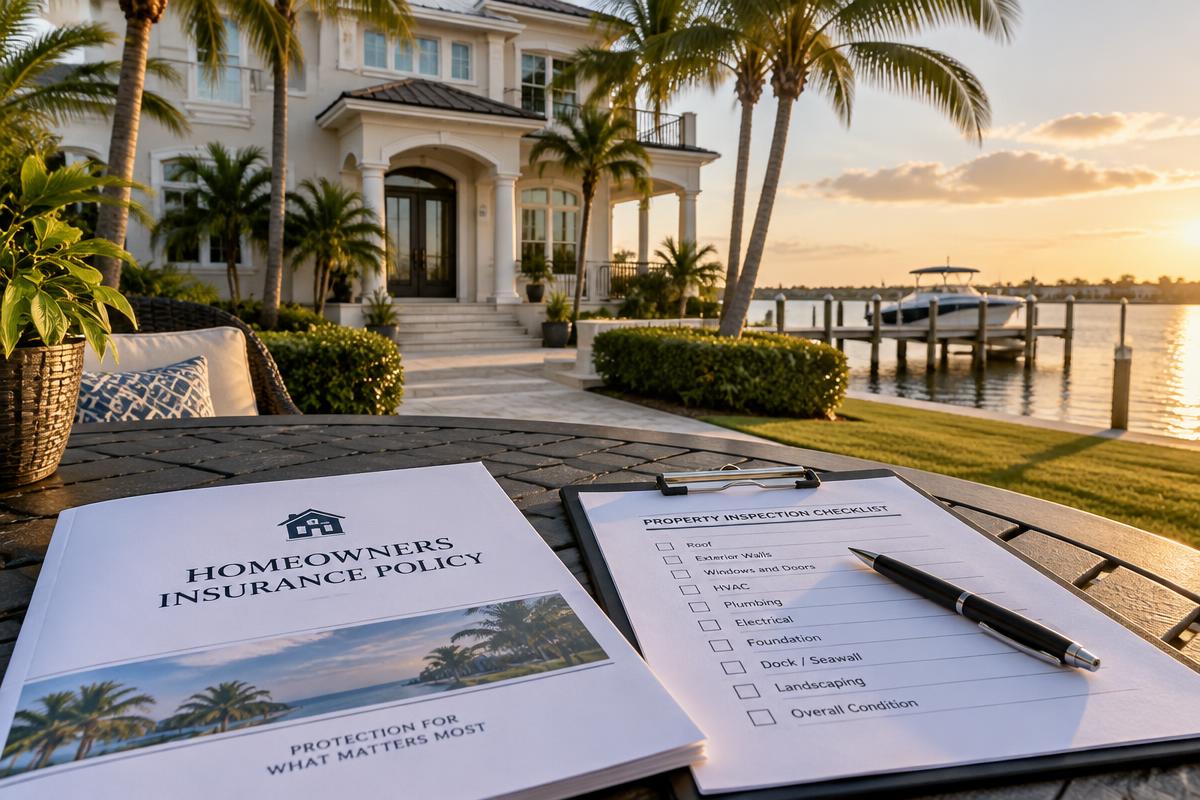
Does Your Homeowners Insurance Require Regular Vacant Home Inspections?
Here's a detail a lot of seasonal Gulf Coast homeowners don't discover until it's too late: many homeowners insurance policies contain a vacancy clause that can limit or void coverage on a claim if the home has sat unoccupied for a certain period without documented inspections. If you're heading up north for the season, this is worth understanding before you leave, not after a pipe bursts.
What Is a Vacancy Clause?
A vacancy clause is standard language in many homeowners and landlord policies stating that if a property is left unoccupied beyond a specified number of consecutive days — commonly 30 to 60, though this varies by carrier and policy — certain types of coverage (water damage, vandalism, and theft are common ones) may be reduced or excluded entirely unless specific conditions are met.
Why Does This Matter for Seasonal Florida Owners?
If you're a snowbird who's away from your Anna Maria Island, Longboat Key, or Bird Key property from spring through fall, your home may technically meet the definition of "vacant" under your policy for months at a time. That's exactly the period when Gulf Coast homes are most exposed — hurricane season, high humidity, and no one present to catch a slow leak before it becomes a mold claim.
What Do Insurance Companies Typically Require to Maintain Coverage on a Vacant Home?
Requirements vary by carrier, but commonly include some combination of:
- Regular inspections at a defined interval (often weekly or bi-weekly)
- Written or photo documentation of each visit
- Prompt reporting of any issues discovered
- In some cases, a formal vacant home endorsement added to the policy
What Happens if a Claim Is Filed on an Undocumented Vacant Home?
This is exactly what a documented home watch service provides — and it's one of the most overlooked reasons to have one, separate from the general peace of mind.
This is where owners get into real trouble. If a pipe bursts and floods a home that's been empty for two months with no inspection records, an insurance company can — and sometimes will — deny or significantly reduce the claim, arguing the vacancy clause wasn't satisfied. A stack of dated, photographed inspection reports is often the difference between a claim being paid in full and a claim being contested.
What Should I Ask My Insurance Agent Before Leaving for the Season?
Every carrier is different, and this is genuinely a conversation to have directly with your agent — but knowing the right questions to ask is the part most owners miss.
- Does my policy have a vacancy clause, and at what point does it activate?
- What specific documentation would satisfy that requirement if I need to file a claim?
- Do I need a vacant home endorsement in addition to my standard policy?
- Does my carrier have any preferred format for inspection reports?
How Home Watch Documentation Helps
A professional home watch visit report — the kind with time-stamped photos and a written checklist, not a quick drive-by — becomes your paper trail. If anything ever happens to the home while you're away, that documentation does two things: it shows the property was actively monitored (helping satisfy vacancy clause requirements), and it gives your insurance company a clear record of the home's condition before and after any incident.
The Bottom Line
Most seasonal owners think about home watch purely as damage prevention. It's that — but it's also insurance protection. A gap in documentation during the months you're away can cost far more than the service itself if a claim ever gets contested.
Coastal Living Property Solutions provides detailed, time-stamped inspection reports on every visit — the kind of documentation that holds up when it matters. We're a third-generation Gulf Coast company, fully bonded and insured, backed by a licensed general contractor, serving Anna Maria Island, Longboat Key, Bird Key, and Manatee County.
This article is for general informational purposes and is not insurance advice. Always confirm your specific policy's requirements directly with your insurance carrier or agent.
Call (941) 289-7939 for a free home watch consultation — and talk to your insurance agent about your specific policy's vacancy requirements before you head north this season. You can also reach us on our Contact Us page.
Coastal Living Property Solutions
Need documented, time-stamped inspection reports that satisfy your policy's vacancy requirements? Coastal Living Property Solutions serves Anna Maria Island, Longboat Key, Bird Key, and Manatee County.
Request a Free Consultation